
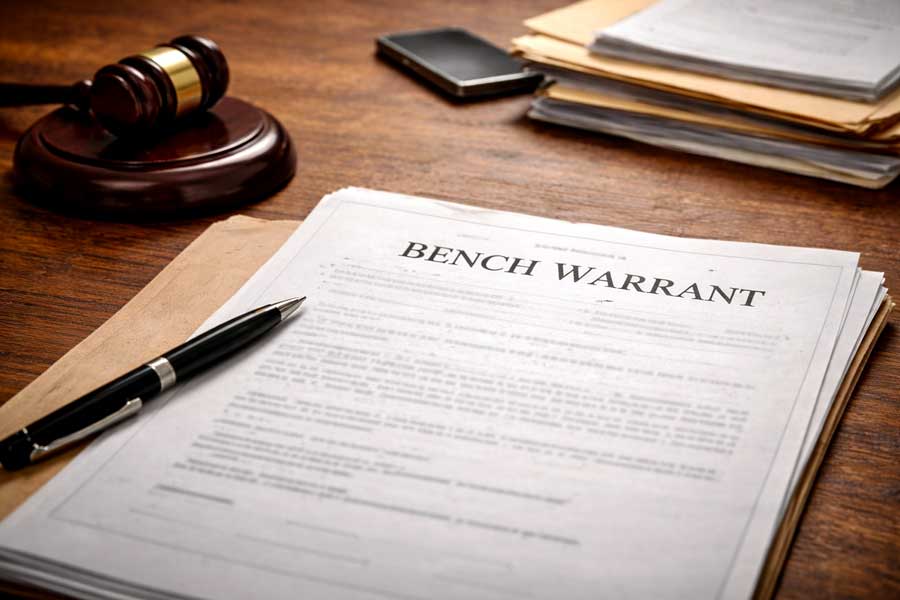
Missing a court date can feel like a small mistake. In reality, it can create serious legal consequences — especially in criminal cases.
Whether the hearing involves a DUI, domestic violence charge, or another criminal matter, failing to appear in court can quickly lead to a bench warrant and additional legal trouble.
Understanding what happens next — and how to fix it — can help you minimize the damage and get your case back on track.
What Is a Bench Warrant?
If you miss a scheduled court appearance, the judge may issue a bench warrant for your arrest.
A bench warrant authorizes law enforcement to take you into custody and bring you before the court. These warrants are commonly issued when someone fails to appear for:
- Arraignments
- Pretrial hearings
- Motions hearings
- Sentencing
- Other required court appearances
Colorado courts have the authority to issue a warrant when a defendant fails to appear after receiving proper notice. See C.R.S. § 16-2-110.
Once a bench warrant is issued, it remains active until the court resolves it.
What Happens After a Bench Warrant Is Issued?
A bench warrant does not necessarily mean police will immediately show up at your door. But it does mean you are subject to arrest.
In practice, people are often arrested when:
- They are stopped for a traffic violation
- Their name appears in a routine records check
- They attempt to resolve the case at the courthouse
Once arrested on a bench warrant, the court may:
- Hold you in jail until a hearing
- Set a new bond
- Increase the existing bond amount
- Impose additional conditions on release
Missing court also damages credibility with the judge, which can affect how the case proceeds.
Failure to Appear May Create Additional Charges
In some situations, missing court can lead to new criminal charges. Under C.R.S. § 18-8-212, knowingly failing to appear after being released on bond may constitute the crime of Failure to Appear.
Depending on the underlying case, this offense can be charged as a misdemeanor or felony. That means a missed hearing can potentially turn one case into two.
Common Reasons People Miss Court
Judges understand that life happens, but courts still expect compliance with court orders.
Common reasons people miss court include:
- Confusion about the court date
- Address changes and missed mail notices
- Transportation problems
- Work conflicts
- Misunderstanding whether attendance was required
Even when the mistake is unintentional, the court may still issue a warrant. That is why addressing the problem quickly is important.
How to Fix a Missed Court Date
If you discover you missed a hearing, acting quickly can make a significant difference. Courts are generally more receptive when someone addresses the issue promptly rather than waiting until they are arrested on a warrant.
Several options may be available depending on the situation.
1. Contacting an Attorney Immediately
One of the safest first steps is contacting a criminal defense attorney as soon as possible.
An attorney can help determine:
- Whether a bench warrant has already been issued
- The current bond status
- Whether the court will allow the matter to be resolved without arrest
- The safest way to return the case to the court’s schedule
In some cases, a lawyer may be able to file a motion to quash the warrant and request that the judge set a new court date instead of requiring the person to be taken into custody.
Attorneys can also communicate with the court clerk or the prosecutor’s office to determine how the specific judge typically handles missed appearances. Every courtroom operates a little differently, and experience with local courts can matter.
2. Turning Yourself In (If Necessary)
If a bench warrant has already been issued, the court may require you to appear in person to resolve it.
Sometimes this means voluntarily appearing at the courthouse or turning yourself in at the jail so the court can address the warrant.
While this may sound intimidating, voluntarily addressing a warrant is often viewed more favorably than being arrested later during a traffic stop or unrelated police contact.
Taking initiative demonstrates to the court that you intend to resolve the case rather than avoid it.
3. Appearing in Court to Clear the Warrant
Once the warrant issue is brought before the judge, the court will usually hold a hearing to address the missed appearance.
At that hearing, the judge may:
- Reinstate the original bond
- Increase or modify bond conditions
- Set a new bond amount
- Require additional assurances that future hearings will be attended
In some cases, the judge may simply recall the warrant and schedule the next court date.
The outcome often depends on the reason the court date was missed and how quickly the issue was addressed.
Providing a Legitimate Explanation
If the missed court date occurred because of circumstances outside your control, it is important to provide documentation whenever possible.
Judges may consider evidence such as:
- Medical records or a doctor’s note
- Proof of hospitalization or medical treatment
- Documentation of mental health conditions such as severe depression or anxiety
- Evidence of transportation emergencies
- Proof that the person was attempting to make payments or comply with court requirements
Courts generally want people to appear and resolve their cases. When someone can show that the absence was due to a genuine hardship rather than an attempt to avoid court, judges may be more willing to recall the warrant and allow the case to proceed normally.
That said, every situation is different, and outcomes depend on the specific facts and the judge involved.
Why Acting Quickly Matters
The most important factor in resolving a missed court date is how quickly you respond.
Waiting weeks or months can make the situation worse. Addressing the issue quickly — especially with documentation explaining the circumstances — gives the court a clearer picture of what happened and can help prevent the situation from escalating.
Moving Forward After a Missed Court Date
Missing a court date does not automatically mean your case is over or that you will go to jail. But it is a situation that should be addressed promptly and carefully. With the right approach, and sometimes supporting documentation explaining the circumstances, many bench warrant situations can be resolved, and the case can move forward.
If you have missed a court date or believe a bench warrant may have been issued, getting experienced legal guidance can help you understand your options and resolve the issue as smoothly as possible.