
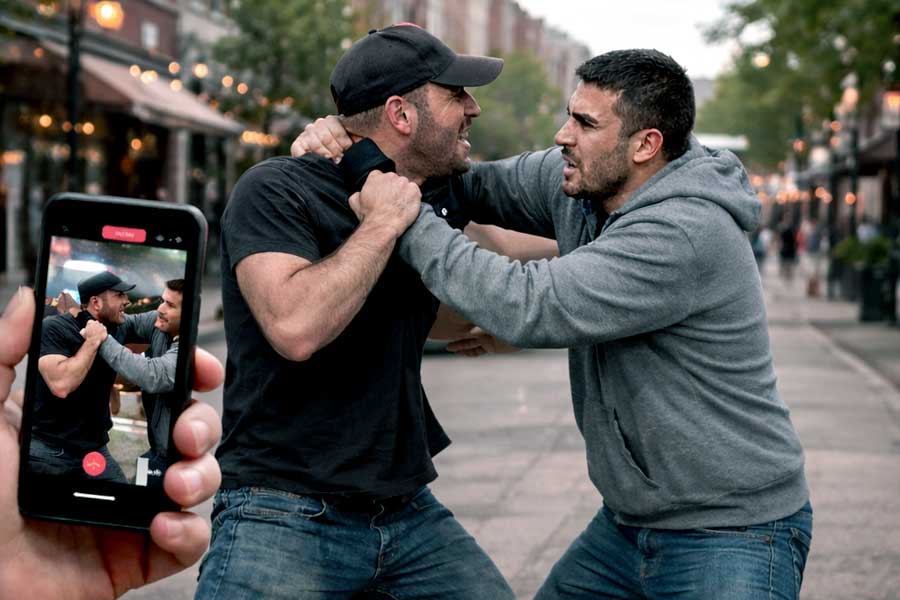
Smartphones and social media platforms like TikTok, Instagram, and Snapchat have transformed how people document the world—including conflicts and altercations. What might start as a bystander filming for social sharing can quickly become evidence in a criminal case or civil dispute in Colorado. Understanding how courts treat livestreams and video recordings captured during an altercation can help protect your rights and inform your legal strategy if you become involved in one.
Why Social Media Video Matters in Legal Cases
Video evidence from bystanders, participants, or even livestream viewers can be powerful because it often shows what actually happened in a way that eyewitness testimony alone does not. In Colorado courts, video recordings shared on social media platforms may be used in:
- Criminal prosecutions (e.g., assault, disorderly conduct, harassment)
- Defensive arguments (challenging the State’s version of events)
- Civil claims arising from altercations (such as claims for damages)
Unlike traditional evidence that is collected by law enforcement, social media videos may be publicly accessible or stored in private accounts. Whether obtained from a livestream, a downloaded clip, or a screenshot, admissibility depends on Colorado’s rules of evidence and proper authentication.
Authentication: Establishing the Source of the Video
Before a video from TikTok or Instagram can be shown in court, it generally must be authenticated—that is, someone must be able to testify that the recording is what it claims to be. According to the Colorado Rules of Evidence, authentication may involve questions like:
- Who recorded the video?
- When and where was it recorded?
- Has the video been altered or edited?
Rule 901 of the Colorado Rules of Evidence requires sufficient evidence to support a finding that the item is what its proponent claims. A video of an altercation shared publicly may be admitted if a witness can confirm that they saw it happen and that the video fairly represents the events.
Public vs. Private Content
Public videos—such as those openly posted on social media or livestreamed without privacy settings—are generally easier for prosecutors or defense attorneys to locate and use. Because these are voluntarily shared in a public forum, courts typically treat them like any other piece of public information.
Private or restricted videos, on the other hand, may require additional steps to be used in court. For example:
- A subpoena or court order may be needed to compel the platform to preserve or produce video that has not been made public.
- The person who recorded the video may be called to testify about the content and authenticity.
Even deleted videos can sometimes be recovered and introduced if properly preserved through legal process.
How Video Can Help—Or Hurt—Your Case
Video of an altercation is not always definitive proof of guilt or innocence, but it can significantly influence outcomes when interpreted alongside other evidence.
For Prosecutors:
- A clear recording of a defendant’s actions can support charges like third‑degree assault or menacing.
- Audio and visual context may show intent, threats, or escalation.
For Defense Attorneys:
- A video may show that the accused acted in self‑defense or that the complaining witness’s account was inconsistent with what actually happened.
- It may also reveal issues with how law enforcement initially identified the parties involved.
However, videos can also be misleading if they capture only part of an incident or lack context. Courts may allow expert testimony or additional evidence to explain what is shown on screen.
Expectations of Privacy and Legal Boundaries
In general, there is no reasonable expectation of privacy when someone records an event in a public place or shares it publicly online. Colorado courts typically permit the use of such recordings as evidence, provided they are authenticated and relevant under the Colorado Rules of Evidence.
That said, recording private conversations without consent can raise legal issues in some situations, particularly where audio is recorded without permission in a private setting. Colorado is a one‑party consent state for audio recordings under Colorado Revised Statutes § 18‑9‑303, meaning at least one person in the conversation must consent to the recording. If neither participant consents, admitting the audio may be legally problematic.
What to Do If You’re Recorded in an Altercation
If you find yourself on camera during a dispute that could lead to legal action:
- Stay calm and avoid escalating the situation further.
- Preserve the evidence—do not delete a video that might be relevant to your case.
- Do not share or alter the video yourself; altered videos may be challenged more easily in court.
- Contact an attorney before making public statements about the incident.
An experienced attorney can help assess how the video might be interpreted, how to authenticate it properly, and whether additional evidence—like other recordings or witness testimony—is needed.
Social Media Impact Beyond the Courtroom
Beyond admissibility as evidence, social media videos can affect public perception and sometimes influence plea negotiations or settlement discussions. Prosecutors may be more inclined to offer certain resolutions when they believe the evidence against a defendant is strong. Conversely, compelling video that supports innocence can be a powerful tool in negotiations or defense strategy.